Scoville Numbers Don't Lie — But Hot Sauce Labels Might
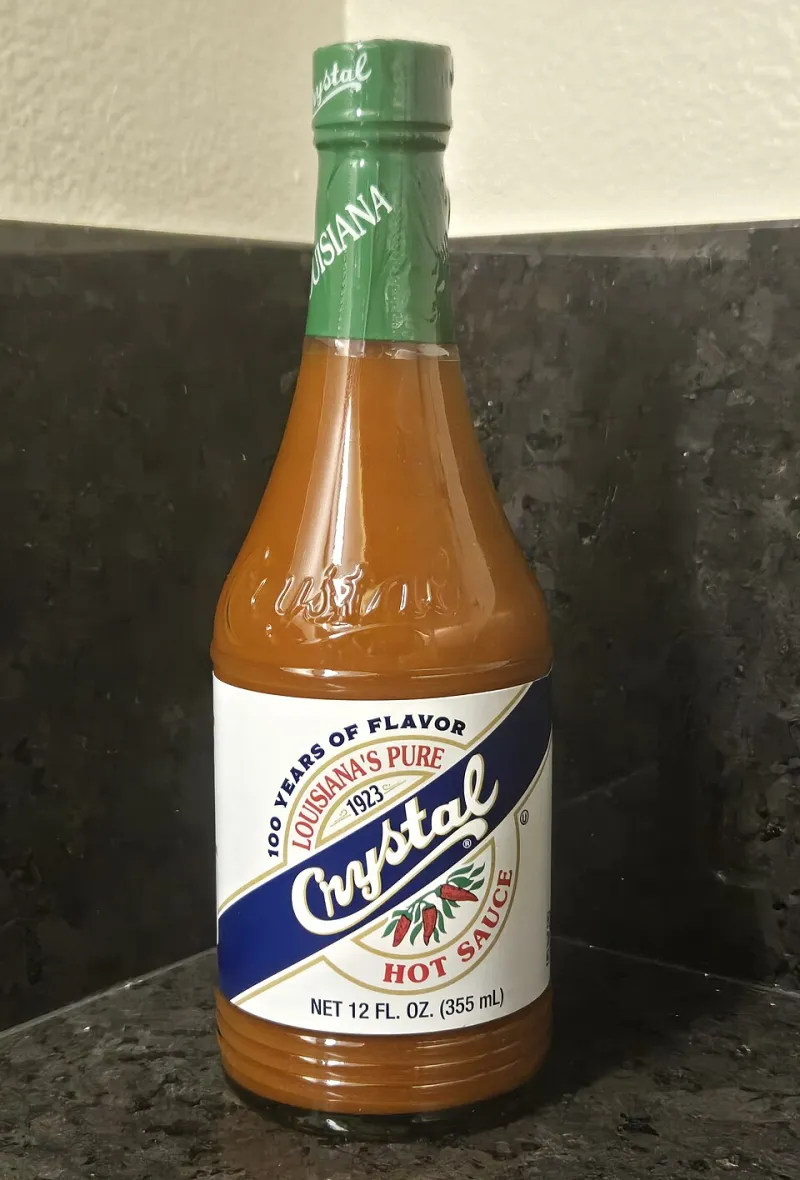
Photo: Spatms, CC BY-SA 4.0, via Wikimedia Commons
Walk down any hot sauce aisle and you'll spot them: bold, aggressive labels plastered with astronomical Scoville numbers. "One million SHU!" "Extreme heat warning!" "Not for the faint of heart!" It's a whole performance. But if you've ever cracked open one of those theatrical bottles and felt... underwhelmed, you're not imagining things. The Scoville scale is a legitimate scientific tool, but the way it gets used in hot sauce marketing is a different story entirely.
Let's break down what's actually going on.
What the Scoville Scale Was Actually Designed to Do
Back in 1912, pharmacist Wilbur Scoville came up with an elegantly simple test: dilute chili pepper extract in sugar water until trained tasters could no longer detect heat. The more dilution required, the higher the Scoville Heat Unit (SHU) rating. A bell pepper sits at zero. A jalapeño lands somewhere between 2,500 and 8,000 SHU. Pure capsaicin — the compound responsible for all that burn — clocks in at around 16 million SHU.
Modern labs have largely replaced human tasters with high-performance liquid chromatography (HPLC), which measures capsaicinoid concentrations directly. It's more precise, but the results are still reported in Scoville units for familiarity. So far, so scientific.
The problem starts when those numbers get applied to finished hot sauce products rather than raw peppers.
Why a Sauce's SHU Rating Can Be Completely Misleading
Here's the thing: a hot sauce isn't just capsaicin. It's a complex mixture of water, vinegar, salt, sugar, fruit, vegetables, oils, and yes, chili peppers. The SHU rating on a finished sauce reflects the capsaicinoid concentration in that entire mixture — not just the pepper component.
So when a brand drops pure capsaicin extract into an otherwise mild base and slaps a "1,000,000 SHU" label on it, they're technically not lying. But what you get is a one-dimensional, almost chemical heat that hits fast and doesn't stick around. Compare that to a well-crafted sauce built around fresh habaneros or serranos, where the heat is layered, complex, and lingers in all the right ways.
The distribution of capsaicinoids also matters enormously. Capsaicin and dihydrocapsaicin — the two primary heat compounds — behave differently in the mouth. Capsaicin tends to hit the front and sides of the tongue quickly. Dihydrocapsaicin activates deeper in the throat and has a slower, longer burn. A sauce's capsaicinoid profile, not just its total SHU count, determines how the heat actually feels.
Testing Popular US Brands: What the Numbers Don't Tell You
Take Tabasco Original Red Sauce. It sits at a modest 2,500–5,000 SHU — practically nothing by internet standards. But ask any serious cook and they'll tell you it punches above its weight. Why? The acidity from the vinegar amplifies heat perception, and the fermentation process develops compounds that interact with your TRPV1 receptors (the pain receptors capsaicin activates) in ways that straight extract never does.
Now consider some of the "extreme" extract-based sauces you'll find at specialty retailers or online. Products marketing themselves at 500,000+ SHU often use oleoresin capsicum — basically concentrated pepper extract — as a shortcut to high numbers. The heat is real, but it's blunt, aggressive, and stripped of any culinary nuance. Great for a dare. Not so great on your tacos.
Then there's something like Cholula or Valentina, both enormously popular in the US despite relatively low SHU ratings. Their loyal followings aren't wrong — these sauces deliver consistent, food-friendly heat because their pepper bases (arbol and piquin for Valentina, arbol and piquin for Cholula too) have capsaicinoid profiles that play well with a wide range of foods.
The takeaway? A 10,000 SHU sauce made from quality peppers will often feel hotter and more satisfying than a 200,000 SHU extract bomb.
The Marketing Game: What to Watch Out For
Some red flags to keep in mind when shopping:
Vague pepper sourcing. If a label says "chili peppers" without specifying which variety, the brand may be using whatever's cheapest rather than what's best. Quality producers are usually proud to name their peppers.
"Capsaicin extract" high on the ingredients list. This is the fast food of hot sauce heat — cheap, efficient, and not particularly interesting. It's not inherently bad, but if you're paying a premium for a craft product, you deserve more than extract.
Impossibly high SHU claims without third-party testing. Anyone can print any number on a label. Reputable brands that make big SHU claims will typically reference independent lab verification. If you can't find evidence of actual testing, be skeptical.
Heat without flavor. This one's subjective, but a good hot sauce should taste like something beyond just pain. If the only thing you notice is the burn, the sauce isn't doing its job.
How to Find Sauces That Actually Match Your Heat Level
The best approach is to think of SHU as a rough guideline rather than a guarantee. Here's a loose framework for US shoppers:
- Under 5,000 SHU — Everyday table sauces. Great for flavor enhancement without overwhelming heat. Think Tabasco, Crystal, Louisiana Brand.
- 5,000–30,000 SHU — Solid mid-range heat. Jalapeño and serrano-based sauces live here. Plenty of craft brands in this zone offer excellent complexity.
- 30,000–100,000 SHU — Getting serious. Cayenne and habanero territory. You'll feel this one, but it's manageable for experienced heat eaters.
- 100,000–500,000 SHU — Enthusiast-level heat. Scotch bonnet and ghost pepper sauces. Use with intention.
- 500,000+ SHU — Extract territory. Proceed with genuine caution and a culinary reason beyond bragging rights.
When possible, buy from brands that let you sample or have generous return policies. Read ingredient lists like a label detective. And trust your palate over any number on a bottle.
The Bottom Line
The Scoville scale is a useful tool, not a definitive verdict on a sauce's quality or real-world heat. Some of the most genuinely fiery, satisfying sauces out there carry modest SHU ratings, while plenty of the flashiest high-number products are more spectacle than substance. At ChiliPilli, we're all about finding heat that's actually worth eating — and that means looking past the marketing to what's really inside the bottle.